
Struggling with scholarship essays? Many students wonder, “Is it safe to use ChatGPT to draft scholarship essays?” AI tools like ChatGPT can assist with ideas and structure, but there are ethical concerns tied to their use.
In this blog, we’ll discuss the risks, benefits, and how you can responsibly use AI. Keep reading for tips that matter!
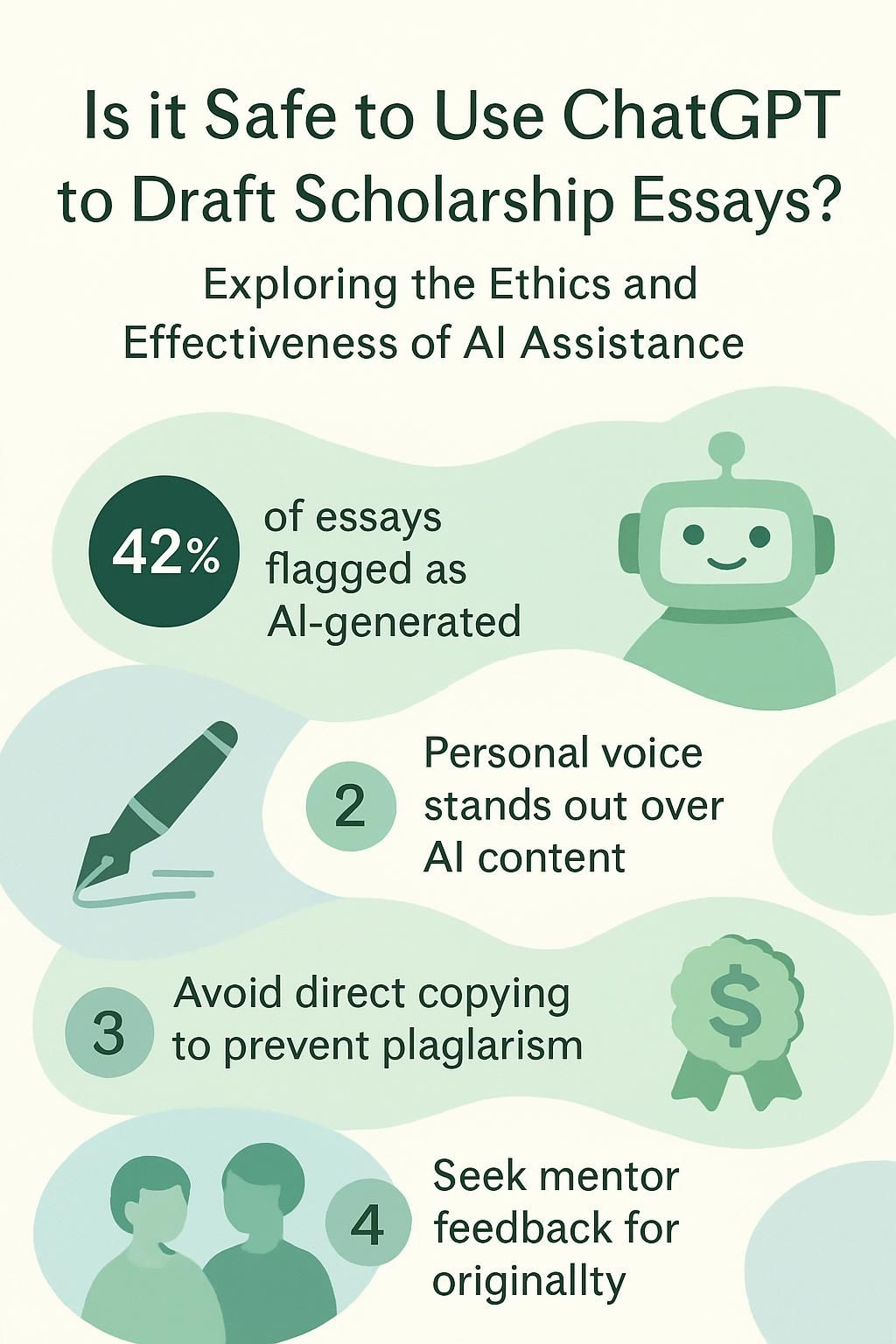
Key Takeaways
- ChatGPT helps with ideas, outlines, and grammar but can’t replace your personal voice or emotions.
- Tools like GPTZero flagged 42% of 1,000 essays as AI-generated; this raises fairness concerns.
- Authentic stories about challenges stand out more to scholarship committees than polished AI content.
- Avoid copying directly from AI tools; plagiarism risks rejection and missed opportunities.
- Ask mentors or teachers for feedback to ensure clarity while keeping your essay original and heartfelt.
Ethical Concerns of Using ChatGPT for Scholarship Essays
Using AI tools for essays raises questions about fairness and originality. It might also blur the line between your true voice and computer-generated content.
Authenticity and personal voice
Essays shaped by ChatGPT often lack a genuine, personal touch. Hyper-organized formats and polished vocabulary make them feel sterile. Scholarship committees notice these patterns quickly.
Artificial intelligence-generated content misses the depth that comes from real experiences.
Will Geiger noted a decline in essay authenticity starting in 2022. J.R. Vasquez stressed essays define a student beyond grades or stats. Personal stories and emotions create connections that AI can’t replicate, making your voice irreplaceable in scholarship applications.
Risk of plagiarism
AI tools like ChatGPT can make plagiarism a big concern. Colleges use detection systems, such as GPTZero. These tools flagged 42% of 1,000 essays as AI-generated in tests. Scholarship applications often value personal voice and originality, which generative AI struggles to replicate fully.
Some students might copy content straight from the chatbot without changes. This risks penalties or essay rejection if flagged for academic integrity issues. “Copy-paste shortcuts may cost more than time—they can cost opportunities.” Many colleges are also cracking down on AI-generated content with strict scholarship guidelines that ban its use entirely.
Now let’s explore how effective these tools are for shaping ideas and structure.
Effectiveness of ChatGPT as a Tool
AI can spark fresh ideas and help with essay flow. It polishes sentences, making them clear and sharp.
Generating ideas and outlines
AI tools like ChatGPT have made brainstorming easier. They help students save time and spark creativity.
- ChatGPT can quickly provide suggestions for essay topics based on common themes in scholarship applications, like personal growth or overcoming challenges. This helps students who feel stuck.
- It offers examples of essay structures suited to specific word limits or requirements. For example, students can ask for a 500-word outline focusing on career goals.
- The tool suggests creative approaches for presenting personal experiences without sounding repetitive or dull, making drafts more engaging from the start.
- Users can refine vague ideas into clear points by interacting with the AI through quick prompts, cutting down hours of indecision.
- It aids with connecting different parts of an outline logically, ensuring the flow is smooth and easy to follow, which many applicants struggle with initially.
- In 2024, surveys showed that 47% of college applicants used AI software to create detailed outlines before starting their essays, proving its popularity as a planning tool.
- Teachers and mentors often recommend using AI for structuring because it boosts confidence in students who may doubt their writing skills while still allowing room for personal input.
Assisting with grammar and structure
Tools like Grammarly can help students catch spelling and grammar issues. Packback also offers AI tools that check essay coherence, improving readability.
“Good writing is clear thinking made visible.”
ChatGPT works well as a support tool to refine sentence structure without changing the writer’s voice. It suggests edits but should not replace human reviews or personal input in scholarship essays.
Guidelines for Responsible AI Use in Scholarship Applications
Stay true to your story, and let your experiences shine through. Use AI as a helper, not a shortcut.
Stay authentic and incorporate personal stories
Authentic essays stand out. Scholarship boards want to know you, not an AI tool. Use personal experiences to show your true self. Monica Matthews, who helps students win scholarships, stresses the power of sharing your journey in essays.
A parent shared how their child won awards with a deeply original and heartfelt essay.
Avoid overused phrases like “I have always been passionate.” These make essays sound robotic or copy-pasted. Use unique memories instead. Stories about challenges you overcame or moments that shaped you connect better than generic content.
Let personal voice shine through every sentence as we move toward proofreading and seeking feedback from others.
Proofread and seek feedback from others
Personal stories bring heart to scholarship essays, but clarity matters too. Use tools like Grammarly for spotting grammar blunders. These tools don’t rewrite your ideas, so they keep your voice intact.
AI-generated content may help with polishing, but errors can slip through if you rely on it alone.
Ask a mentor or teacher to review your draft. Fresh eyes catch things you might miss, like awkward phrasing or unclear sections. Feedback improves essay structure and coherence without changing its authenticity.
It’s better to hear criticism from someone you trust than face rejection from the scholarship committee later.
Considerations on AI Detection Tools and Their Impact on Applications
AI detection tools like GPTZero have flagged 42% of 1,000 essays as possibly AI-assisted. Colleges now face a tough job confirming authenticity. This can lead to some essays being unfairly rejected, even if they are original.
Non-native English speakers often suffer the most since their writing style might falsely raise suspicion.
The Common App forbids generative artificial intelligence use but lacks routine checks unless fraud is reported. Transparency could help reduce these issues, according to Jonah O’Hara.
Overloading essays with big words created by AI may also hurt applicants instead of helping them succeed. Ethical AI use matters for fair scholarship applications ahead!
Conclusion
Using ChatGPT for scholarship essays is tricky. It can help with ideas and grammar, but it can’t match your true voice or emotions. Essays should feel personal, like a window into your life.
Relying too much on AI risks losing that connection. Keep it real, and let your story shine brighter than any algorithm!
For further reading on how AI detection tools might impact individuals with disabilities during the application process, check out our article, “Do AI Detectors Discriminate Against Disabilities?”.